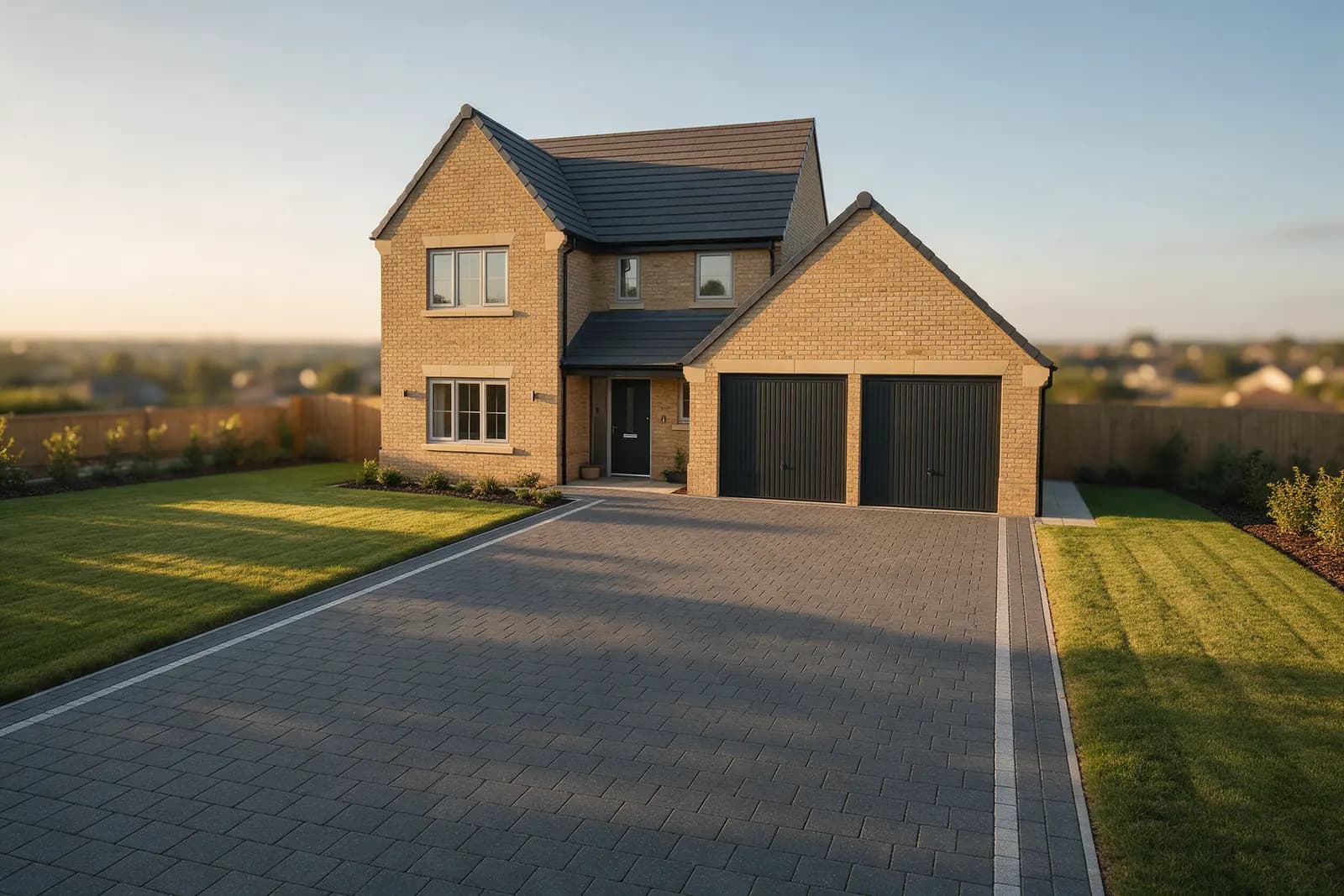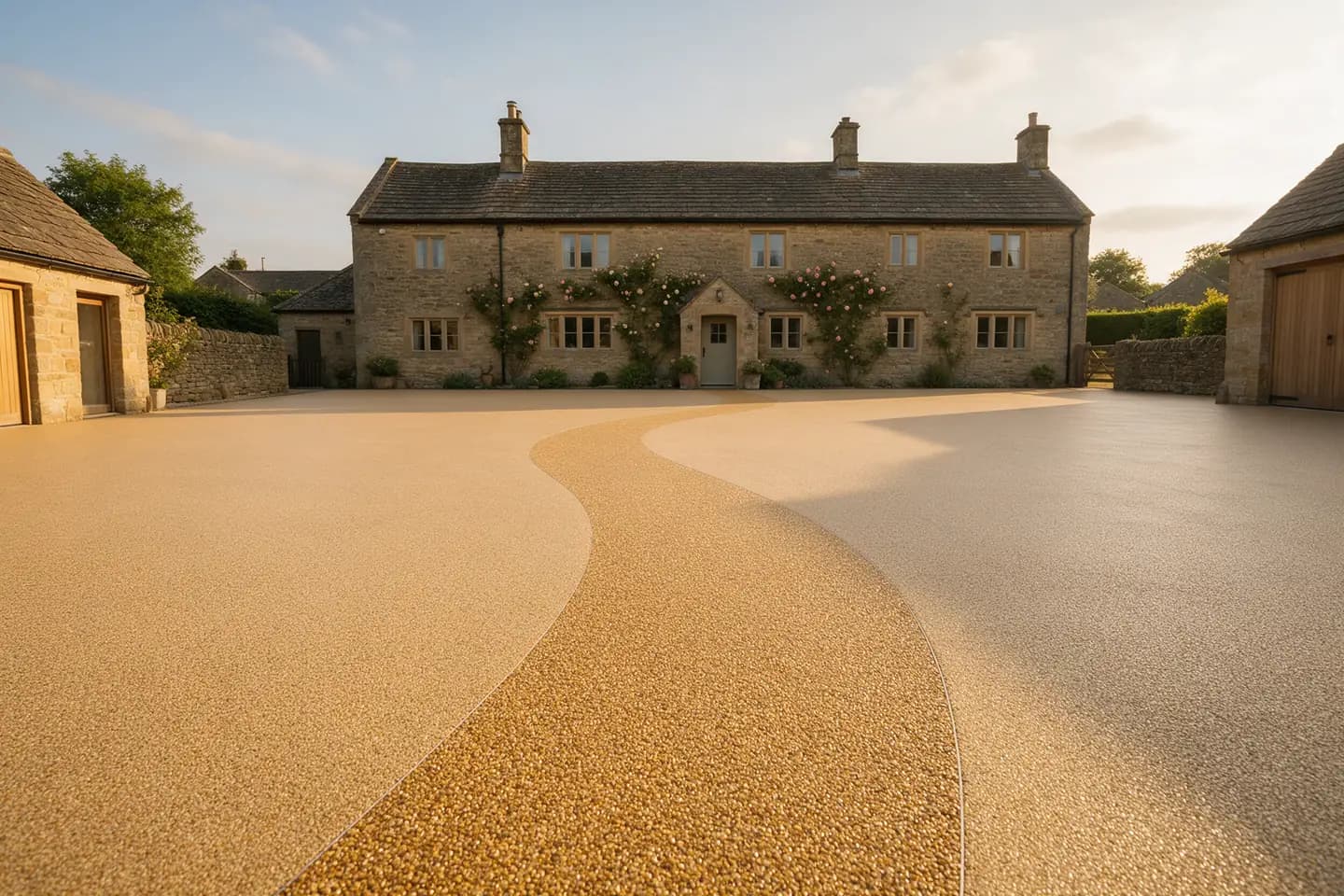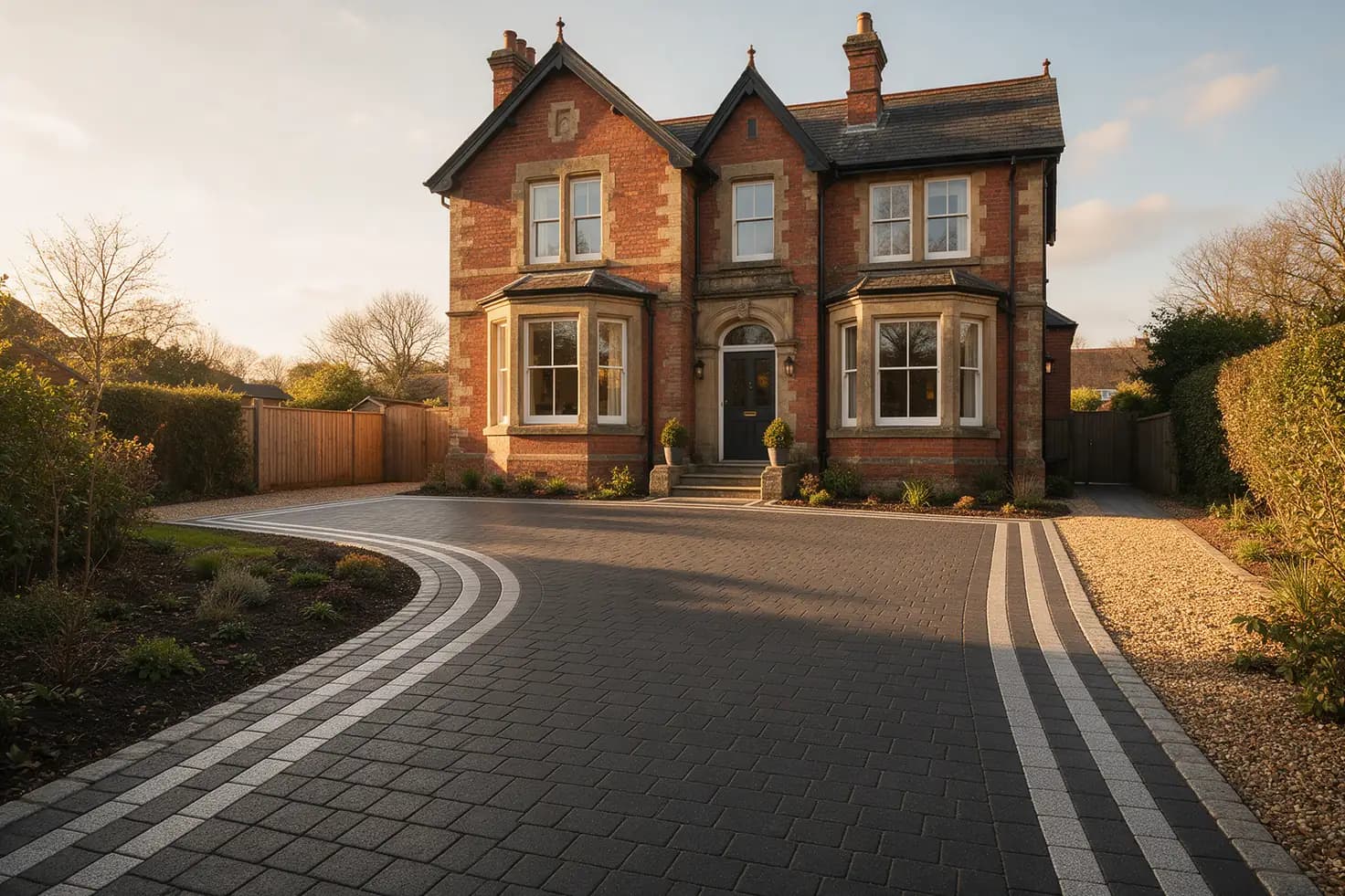
For most houses in England, a new driveway doesn’t need planning permission, as long as the rainwater that falls on it soaks into the ground on your own property. Where people go wrong is the detail: what counts as permeable, what happens on a sloping drive, and the separate approvals that have nothing to do with planning at all. This guide covers all of it.
The October 2008 rule in plain English
Until 2008 you could pave over a front garden without asking anyone. After the summer floods of 2007, when surface water overwhelmed drains across the country and Hull was among the places worst hit, the government changed the permitted development rules for houses in England. Since 1 October 2008, front-garden paving has had to deal with its own rainwater.
- It applies to the land between the front of your house and the road.
- It covers new and replacement surfaces: driveways, parking areas and paths.
- The threshold is 5 m², roughly a 2.5m by 2m patch. Most drives are well over it.
- Permeable surfaces of any size comply, as do impermeable ones that drain to a permeable area on your property.
- Piping the water into the drains, or letting it run onto the pavement or road, does not comply.
Which surfaces count as permeable
Permeable block paving with gritted joints, resin bound aggregate laid on a permeable base, porous asphalt and loose gravel all let water through. The key is the whole build-up, not just the top layer: a permeable surface laid on an impermeable base still sheds its water, so it has to be treated like an impermeable one.
What ‘draining to a permeable area’ means
With standard block paving, tarmac or concrete, the drive is shaped so water runs onto a lawn, flower border or rain garden and soaks away there. Where the levels don’t allow it, a channel drain across the drive collects the water and pipes it to a soakaway on your land. Both are legitimate ways to comply.
What SuDS means for a driveway
SuDS stands for sustainable drainage systems. The idea is to handle rain the way open ground does: let it soak in where it lands, slow it down and hold it back, instead of sending it straight into the sewers. Many older Yorkshire towns have combined sewers that carry rainwater and sewage together, and in a cloudburst they can overflow. Every paved front garden adds to that load. For a homeowner, SuDS simply means water from your drive stays on your land.
- Permeable surfaces: permeable block, resin bound on a permeable base, porous asphalt or gravel.
- Falls to soft ground: the drive tilts gently towards a lawn, border or rain garden.
- Soakaways: an underground crate or stone-filled pit that stores water and lets it seep away.
- Channel drains: a grated drain across the drive, piped to a soakaway rather than the sewer.
Soakaways and Yorkshire ground
A soakaway is only as good as the ground around it. A percolation test, digging a trial hole and timing how fast water drains away, tells us how big it needs to be. Heavy clay, common in parts of the Vale of York and the East Riding, drains slowly and needs a larger soakaway or a different approach. Soakaways should sit at least 5m from a building so the water doesn’t soften foundations.
Four quick examples
- A 40 m² block paved drive on a semi that falls towards a lawn: permitted development.
- The same drive falling onto the pavement: needs planning permission, or a redesign with a channel drain and soakaway.
- A resin bound drive on a permeable base: permitted at any size.
- A tarmac driveway covering a whole front garden with no border: needs permission unless the water is collected and taken to a soakaway.
When you do need permission
- An impermeable front-garden surface over 5 m² with nowhere permeable for the water to go.
- Flats and maisonettes, which don’t have the same permitted development rights as houses.
- Homes where permitted development rights have been removed, by an Article 4 direction or by a condition on the original planning permission, as on some newer estates.
- Listed buildings, where works may also need listed building consent.
- A new access onto a classified road (an A, B or C road), which needs planning permission as well as highway approval.
Conservation areas and listed buildings
Yorkshire is full of conservation areas, from the historic centres of York, Harrogate and Beverley to mill villages in the Pennines. Some have Article 4 directions that remove the right to pave a front garden or take down a boundary wall without permission. In a conservation area, demolishing a front wall over 1m high next to the road normally needs planning permission too. If your home is listed or in a conservation area, check with the council’s planning team before you book anyone.
Dropped kerbs: a separate approval
Planning permission, or permitted development, covers the drive itself. It doesn’t give you the right to drive across the pavement. For that you need a dropped kerb, also called a vehicle crossover, approved by your council as the highway authority. It’s a separate application with its own criteria: visibility, distance from junctions, trees, lamp posts and whether your parking space is deep enough that a car won’t overhang the footway. The kerb itself is built by the council or a contractor it approves.
We don’t build dropped kerbs. What we do is advise you at the survey: whether a crossing looks feasible, what the council is likely to ask, and how to line the new drive up with it. We can then time our work around the council’s.
How we keep you compliant
- At the survey we check whether the drive is in a front garden and over 5 m².
- We design it to comply by default: a permeable build-up, or falls to a permeable area or soakaway.
- Where a soakaway is needed, we test how quickly the ground drains and size it to suit.
- We flag listed buildings, conservation areas, flats and newer estates so you can check with the council first.
- Your written quote states exactly where the water goes, so there’s a record if anyone asks.
Flat, low-lying areas such as Hull need particular care, because gentle falls and high ground water limit the options. That’s a conversation for the survey, not something to discover after the drive is down.