Block paving · Yorkshire
Block paving driveways in Yorkshire, built from the ground up
Block paved driveways dug to the right depth, built on compacted MOT Type 1 and edged in concrete, so they stay level for decades. Free survey within 3 working days, a fixed written quote and a 10-year guarantee.
From £70/m²Usually 4–6 days on site
Overview
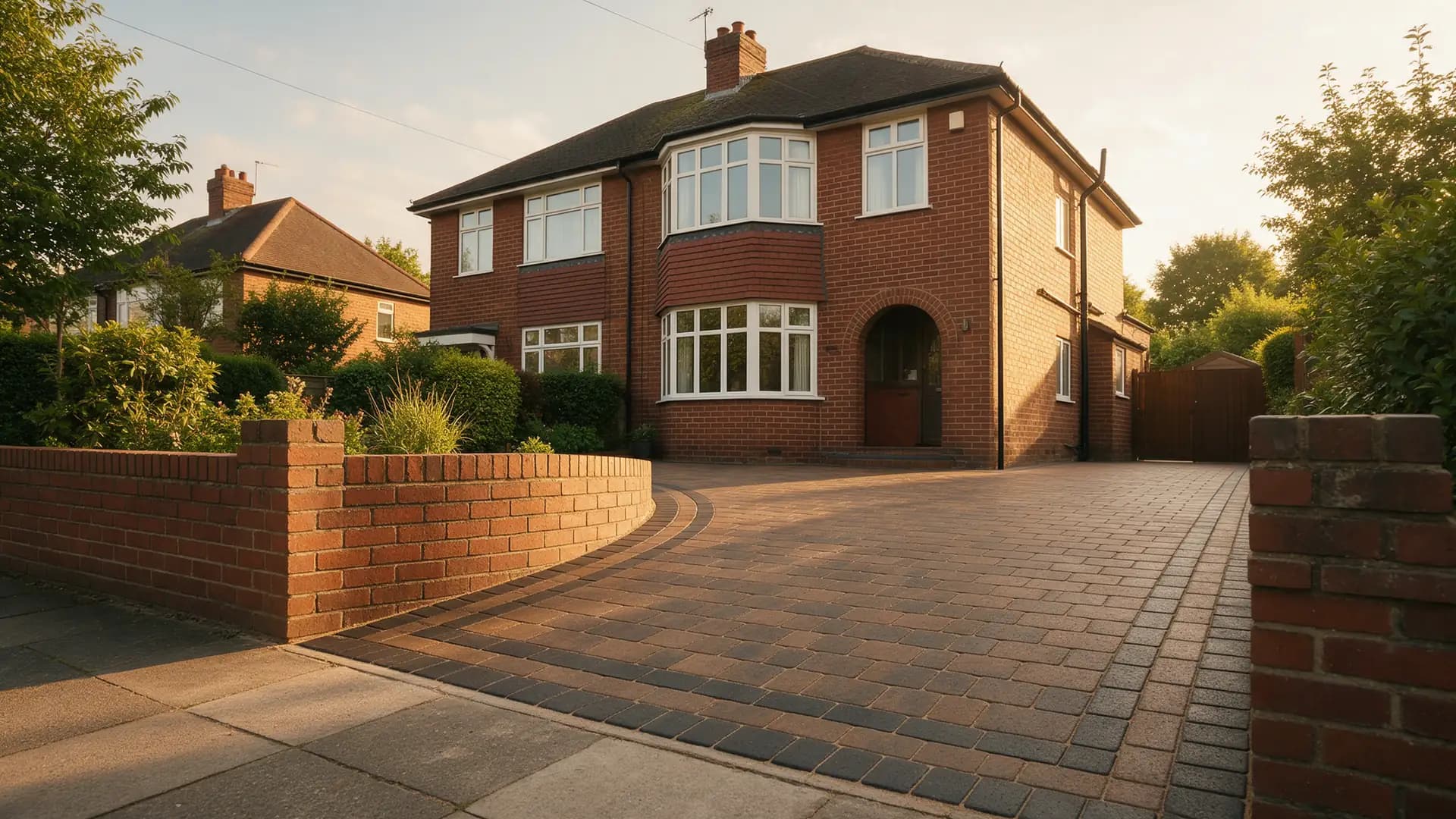
Block paving is a surface of small concrete blocks laid on a bed of sharp sand over a compacted stone base, held in place by edge courses set in concrete. Laid well, it carries cars for decades, shrugs off Yorkshire frosts and can be lifted and relaid if a pipe or cable ever needs reaching. It suits almost any house, from stone terraces in Bradford to new-builds on the edge of York.
It comes into its own on drives that take two or more cars, on sloping plots where you want grip underfoot, and for anyone who wants pattern and colour: herringbone, a contrasting border, a band across the entrance. It is not the quickest option, and it is rarely the lowest cost. If the budget is tight and the drive is a simple rectangle, a tarmac driveway may serve you better, and we will say so.
The difference between a good block drive and a poor one is almost all underground. A good one is dug 200–250mm deep, with around 150mm of MOT Type 1 compacted in layers, a 30–50mm sand bed, edges haunched in concrete and falls that send water somewhere useful. A poor one is dug 100mm, has a skim of hardcore, sand laid straight onto clay and edge blocks sitting in loose sand. Both look the same for six months. Then the poor one ruts where the tyres run, the edges creep outwards and puddles gather by the front door.
We write the dig depth, sub-base thickness and drainage plan on every quote, so you can compare like with like. You are welcome to watch each layer go in, and Denis checks the levels before a single block is laid. Our block paving cost guide for Yorkshire explains what moves the price, and how we work sets out each step from survey to handover.
Specification
The numbers that matter
- Typical lifespan
- 20–25 years or more
- Sub-base
- 150mm MOT Type 1 in a 200–250mm dig
- Laying course and blocks
- 30–50mm sharp sand, 50mm blocks
- Permeable?
- Standard block: no, so we add drainage. Permeable block: yes
- Ready to drive on
- From handover, once the joints are compacted
- Time on site (50 m²)
- 4–6 days
The build
How we build it
A block drive is only as good as the layers you never see again. This is the sequence we follow on every job, and you are welcome to check each stage as it goes in.

Survey, levels and setting out
We measure, check levels against your damp-proof course and locate drains, inspection chambers and services. Then we mark out the shape and the falls, and decide exactly where every drop of rainwater will go.
Dig out and muck-away
The old surface and soil come out to 200–250mm below finished level, deeper over soft spots. Spoil leaves by grab lorry or skip with a registered waste carrier, and we keep the pavement clear as we go.
Membrane and drainage
A geotextile membrane goes over the dug ground to stop the stone base mixing into the subsoil. Channel drains, soakaways and any raised or recessed inspection covers are fitted now, before the base is built.
Sub-base compacted in layers
Around 150mm of MOT Type 1 crushed stone is laid in two layers, each compacted with a plate compactor or roller and checked against string lines for the correct falls.
Edges bedded in concrete
Edge courses and kerbs are laid on a concrete bed and haunched on the outside. They form a rigid frame that stops the blocks spreading under the weight of cars.
Sand bed and blocks
Sharp sand is screeded to an even 30–50mm, then the blocks are laid in your chosen pattern. Cuts are made with a saw for clean lines, and we plan the layout so there are no tiny slivers at the edges.
Joint, compact and hand over
Kiln-dried sand is brushed into the joints and the surface is compacted through a protective mat, then sanded again. We clean down, walk the drive with you and explain how to look after it.
Finishes
Colours and finishes
Concrete block comes in more colours than most people expect. These are the shades homeowners choose most often; we bring real samples to the survey, because a screen never shows them accurately.
Colours on screen are a guide — we bring real samples to your survey.
Charcoal
Crisp and modern; hides tyre marks
Brindle
Red, brown and charcoal blend; very forgiving
Natural
Soft grey; suits stone and render
Autumn
Warm gold, red and brown tones
Silver granite
Speckled light grey; a granite look in concrete
Buff
Pale sandy tone; good with Yorkshire stone
Price guide
What it costs
Standard 50mm concrete block
- Per m²
- £70–£95
- Typical jobfor about 50 m²
- £3,500–£4,750
Premium tumbled or textured block
- Per m²
- £90–£125
- Typical jobfor about 50 m²
- £4,500–£6,250
| Option | Per m² | Typical job |
|---|---|---|
| Standard 50mm concrete block | £70–£95 | £3,500–£4,750for about 50 m² |
| Premium tumbled or textured block | £90–£125 | £4,500–£6,250for about 50 m² |
Estimate your project
Guide price
£3,500 to £4,750
Guide price · typically 4–6 days
50 m² · Standard 50mm concrete block
Rather talk it through? Call 07957 236658
An honest guide, not a quote. Levels, ground conditions and access all affect the final figure, so we always survey before giving you a fixed price in writing.
Guide price £3,500 to £4,750.
Aftercare
Looking after it
Block paving needs very little looking after, but a few habits keep it like new for years.
- Top up the joints with kiln-dried sand after the first few weeks; it settles as the drive beds in.
- Sweep regularly with a stiff brush so seeds and dust don’t build up in the joints.
- Pressure wash no more than once a year, with a fan nozzle held at an angle, then re-sand the joints straight away.
- Treat oil drips quickly with an absorbent and a block paving cleaner before they soak in.
- White salt bloom on new blocks (efflorescence) is natural and fades within months; don’t scrub it with acid.
- If you seal the paving, wait until any bloom has gone and reseal every few years.
Questions
Block paving: your questions
How deep should a block paving driveway be dug?
For cars, about 200–250mm below the finished surface. That allows around 150mm of compacted MOT Type 1, a 30–50mm sand bed and the 50mm blocks. On soft clay or made-up ground we dig deeper and add more sub-base. If a quote doesn’t state the dig depth and sub-base thickness, ask before you sign; it is the single biggest factor in how long the drive lasts.
Can you lay block paving over my old concrete or tarmac?
Almost never. Sand laid over old concrete traps water, the blocks have nothing to grip and the new surface sits higher, often too close to your damp-proof course and door thresholds. We dig out the old surface and build a proper base. If part of an existing slab is sound and well below the finished level, we may keep it as part of the sub-base, and we’ll explain why in writing.
Why do weeds grow in block paving, and how do I stop them?
The membrane under the base stops weeds coming up from below. What you see are seeds that land on top and root in the joint sand. Keeping the joints full of kiln-dried sand, sweeping regularly and pulling seedlings while they are small keeps them at bay. A good-quality paving sealer also binds the top of the joint sand, which helps.
Will my new drive sink or rut?
Not if it’s built properly. Ruts and dips come from a thin or poorly compacted sub-base, sand laid on soft ground or edges that aren’t haunched in concrete. Those are exactly the things we write on the quote and check as we build. Settlement caused by our workmanship is covered by our 10-year written guarantee.
Should I have my block paving sealed?
It’s optional. A sealer makes oil and dirt easier to clean, deepens the colour slightly and binds the joint sand. The downsides are cost and resealing every few years. If you want it, wait until any white efflorescence has weathered away, usually a few months, otherwise the bloom gets sealed in. We’ll talk you through it at handover.
Can you extend my existing block paving to match?
We can, but new blocks rarely match old ones exactly. Colours vary between batches and existing paving has weathered for years. Rather than a patch that looks newer, we often suggest a deliberate contrast, such as a border or a band in a darker block, or lifting and relaying the old area with the new. We’ll bring samples so you can judge.
Also consider
Related services


Free quote
A fixed price, after a free survey
Tell us what you have in mind and we’ll arrange a visit. You’ll get a fixed written quote, a 10-year guarantee and no pressure to decide.
Free survey · fixed written quote · no pressure