There’s no surface that suits every house. Block paving, resin bound and tarmac each do some things very well and some things badly, and the right choice depends on your drive’s size, slope, drainage, the vehicles that use it and how it needs to look. This guide puts them side by side, honestly, including where each one falls short.
At a glance
- Look
- Block pavingPatterns, borders, many colours
- Resin boundSmooth, natural stone texture
- TarmacPlain black or red; chippings optional
- Typical lifespan
- Block paving20–25 years or more
- Resin bound15–25 years
- Tarmac15–20 years
- Permeable?
- Block pavingOnly permeable block
- Resin boundYes, on a permeable base
- TarmacNo, unless porous asphalt
- Maintenance
- Block pavingTop up joint sand, pull seedlings
- Resin boundSweep, occasional gentle jet wash
- TarmacSweep; avoid point loads in heat
- Time on site (50 m²)
- Block paving4–6 days
- Resin bound2–4 days
- Tarmac2–3 days
- Ready to drive on
- Block pavingAt handover
- Resin boundAfter 24–48 hours
- TarmacWithin 24–48 hours
- Repairs
- Block pavingSame blocks lifted and relaid
- Resin boundPatches usually visible
- TarmacPatches visible
- Relative cost
- Block pavingMid to high
- Resin boundMid to high; overlay lower
- TarmacLowest per m²
| — | Block paving | Resin bound | Tarmac |
|---|---|---|---|
| Look | Patterns, borders, many colours | Smooth, natural stone texture | Plain black or red; chippings optional |
| Typical lifespan | 20–25 years or more | 15–25 years | 15–20 years |
| Permeable? | Only permeable block | Yes, on a permeable base | No, unless porous asphalt |
| Maintenance | Top up joint sand, pull seedlings | Sweep, occasional gentle jet wash | Sweep; avoid point loads in heat |
| Time on site (50 m²) | 4–6 days | 2–4 days | 2–3 days |
| Ready to drive on | At handover | After 24–48 hours | Within 24–48 hours |
| Repairs | Same blocks lifted and relaid | Patches usually visible | Patches visible |
| Relative cost | Mid to high | Mid to high; overlay lower | Lowest per m² |
Cost: where the difference comes from
All three share the same groundwork costs: digging out, muck-away, a compacted sub-base, edging and drainage. The difference is in the surface. Tarmac is laid hot by a small team and rolled, so it has the lowest labour per square metre. Block paving is the most labour-intensive, because every block and every cut is placed by hand. Resin sits between the two, and an overlay on a sound existing surface skips the dig-out entirely.
Guide prices for the three driveway surfaces in Yorkshire, 2026. Fixed quotes follow a free survey.
Standard 50mm concrete block
- Per m²
- £70–£95
- Typical jobfor about 50 m²
- £3,500–£4,750
Premium tumbled or textured block
- Per m²
- £90–£125
- Typical jobfor about 50 m²
- £4,500–£6,250
Full installation with a new base
- Per m²
- £80–£120
- Typical jobfor about 50 m²
- £4,000–£6,000
Overlay onto sound existing tarmac or concrete
- Per m²
- £55–£75
- Typical jobfor about 50 m²
- £2,750–£3,750
Black tarmac
- Per m²
- £50–£75
- Typical jobfor about 50 m²
- £2,500–£3,750
Red tarmac
- Per m²
- £65–£95
- Typical jobfor about 50 m²
- £3,250–£4,750
| Option | Per m² | Typical job |
|---|---|---|
| Block Paving | ||
| Standard 50mm concrete block | £70–£95 | £3,500–£4,750for about 50 m² |
| Premium tumbled or textured block | £90–£125 | £4,500–£6,250for about 50 m² |
| Resin Driveways | ||
| Full installation with a new base | £80–£120 | £4,000–£6,000for about 50 m² |
| Overlay onto sound existing tarmac or concrete | £55–£75 | £2,750–£3,750for about 50 m² |
| Tarmac Driveways | ||
| Black tarmac | £50–£75 | £2,500–£3,750for about 50 m² |
| Red tarmac | £65–£95 | £3,250–£4,750for about 50 m² |
Size changes the picture. On a long rural drive, tarmac’s lower rate per square metre adds up to a large saving. On a small, awkward front garden, the gap narrows, because set-up and edging dominate. For the detail, read our block paving cost guide and resin cost guide.
Lifespan and durability
Lifespan depends far more on the base than the surface. Laid properly, block paving typically lasts 20–25 years or more and copes well with heavy loads and turning wheels, because the interlocking blocks spread the weight. Resin bound lasts 15–25 years but dislikes vans turning on the spot, oil and hot objects. Tarmac lasts 15–20 years; it stays slightly soft for weeks after laying and can mark under stands and jacks in hot weather.
Frost is the common enemy. Water that gets into cracks freezes, expands and widens them, so any surface on a weak base deteriorates fastest through a Yorkshire winter.
Look and style
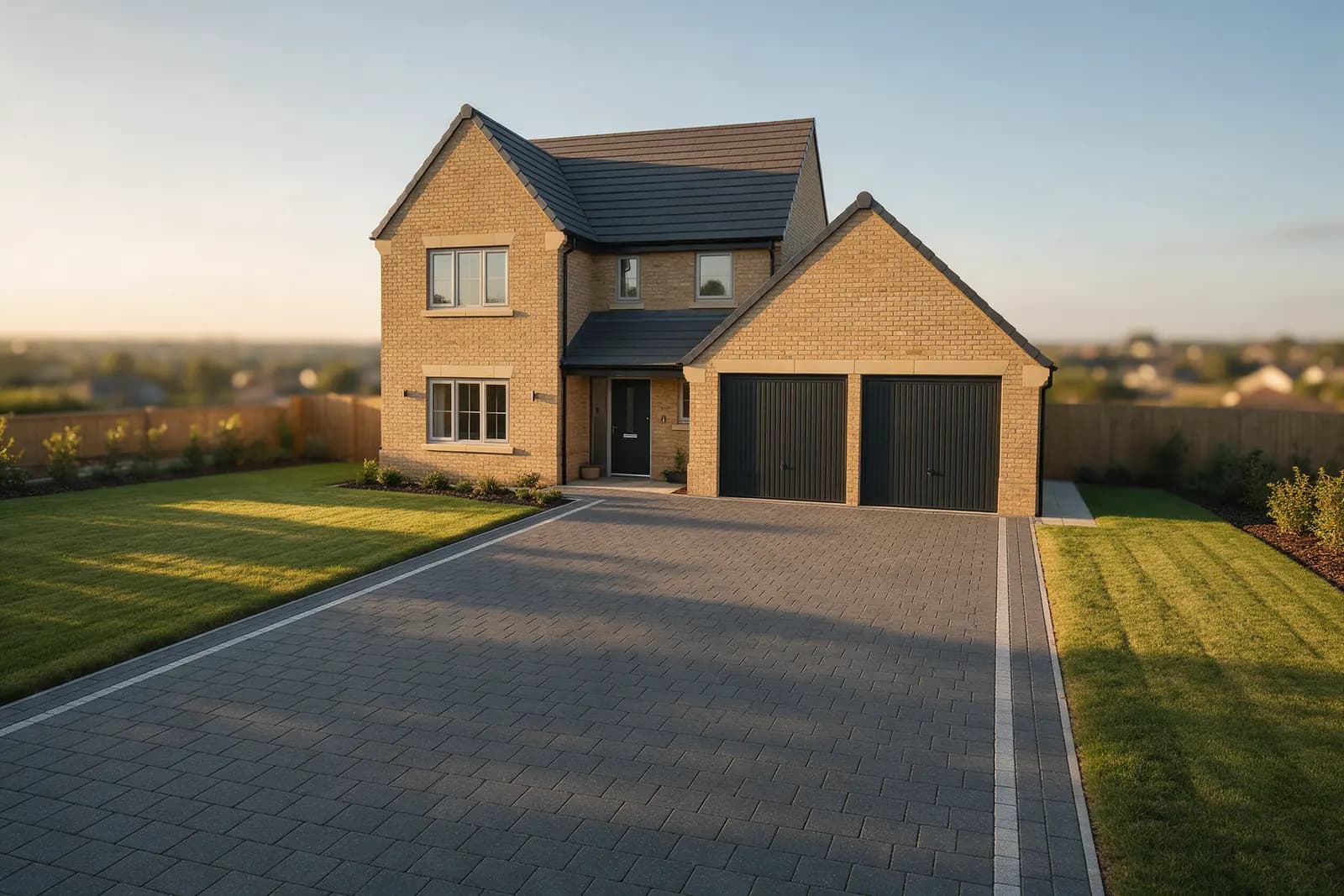
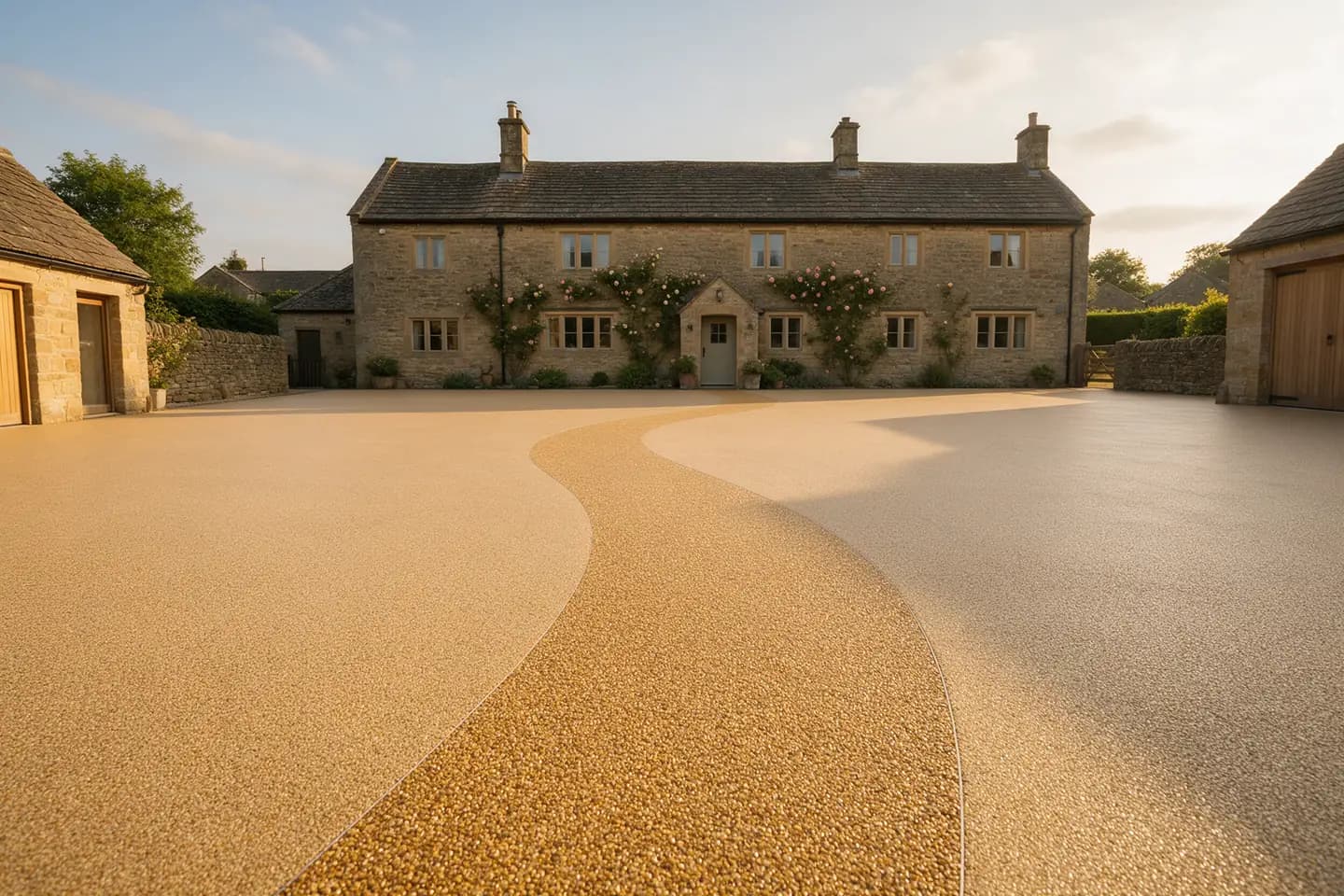
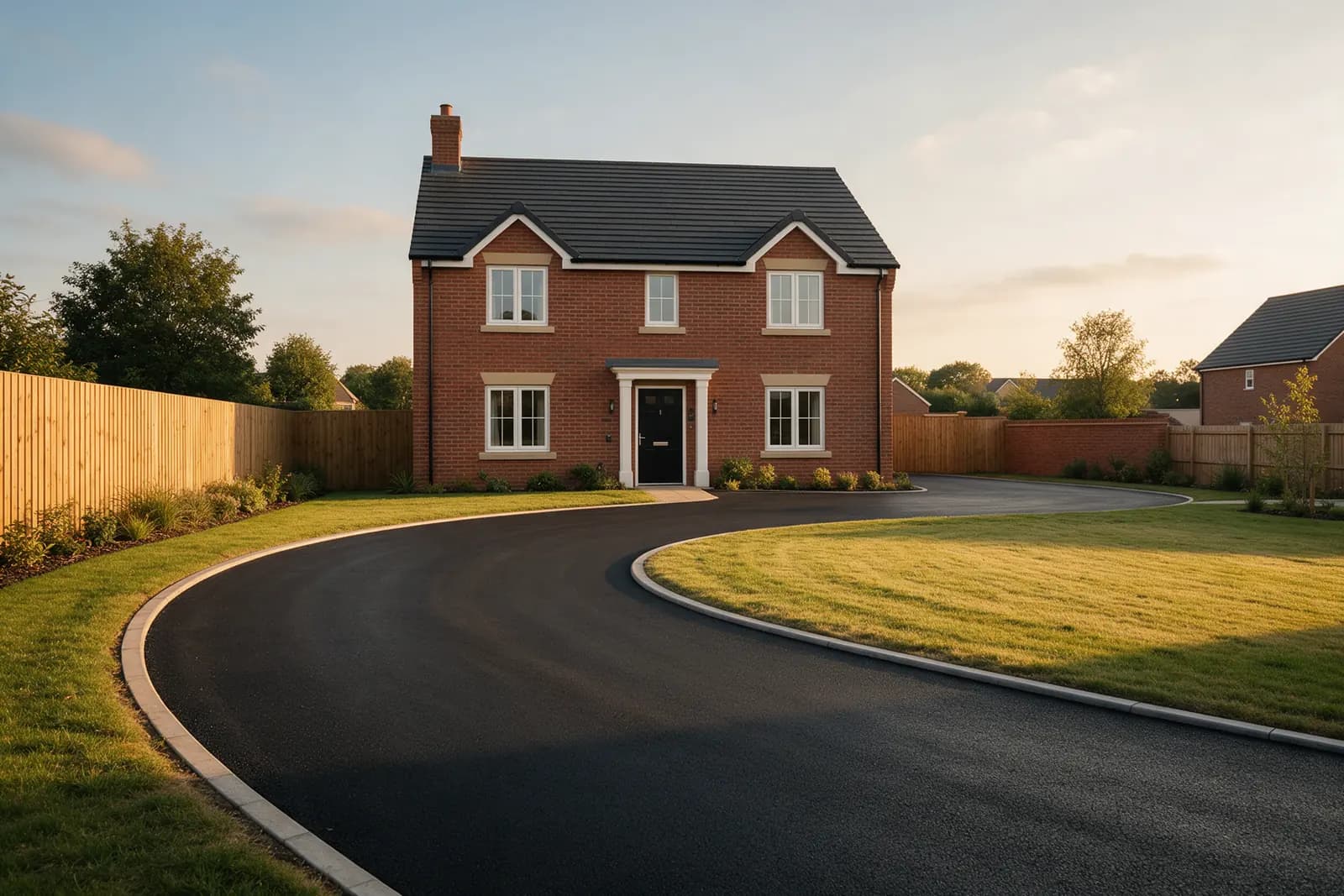
Block paving offers the most design freedom: herringbone or stretcher bond, borders, bands and dozens of colours, from charcoal to brindle. Resin bound gives a smooth, jointless finish in natural stone colours that suits both period and modern houses. Tarmac is plain and practical, though a contrasting block border or rolled-in golden chippings make it look considerably smarter.
Maintenance
- Block paving: top up the joint sand after the first few weeks, sweep regularly and pull seedlings while they’re small. Optional sealing every few years.
- Resin bound: sweep to keep the pores open and jet wash gently once or twice a year. Nothing grows up through it, though moss can form on the surface in shade.
- Tarmac: very little once hardened. Sweep, clean up oil promptly and protect it from point loads while it’s new.
Drainage and planning
In England, a front-garden drive over 5 m² must be permeable or drain to a permeable area on your property, or it needs planning permission. Resin bound on a permeable base and permeable block paving comply on their own. Standard block and tarmac comply when the falls send water to a lawn, border or soakaway. Our guide to driveway planning permission and SuDS explains the rule in full.
How permeable block paving works
Permeable block looks much like standard block, but the joints are wider and filled with fine grit, and the base is open-graded stone with no fine dust in it. Rain drains through the joints into the base, which holds it while it soaks into the ground. The deeper, specialist base costs more than a standard one, but it can remove the need for channel drains and soakaways.
Installation time and disruption
For a typical 50 m² drive, tarmac takes 2–3 days and resin 2–4, though resin can only be laid in dry weather and needs 24–48 hours before you park on it. Block paving takes longest at 4–6 days, but it can be driven on as soon as it’s handed over. With all three, plan to park on the street while the work is under way.
Repairs and future-proofing
This is where block paving stands apart. If a utility company digs a trench, or a block is damaged, the same blocks are lifted and relaid with no visible patch. Resin and tarmac can be repaired, but the patch nearly always shows. If you’re planning an electric car charger, new water pipes or outdoor lighting, have the ducts laid before the new surface goes down.
Cost over the life of the drive
The surface that costs least to lay isn’t always the one that costs least to own. Tarmac is the lowest-cost start and needs little upkeep, but damage can’t be patched invisibly. Block paving costs more at the outset and needs a little joint sand over the years, yet repairs are simple and the blocks can be lifted and reused. Resin needs very little maintenance; its long-term cost depends almost entirely on whether the base was built properly in the first place.
Which is right for you?
Choose block paving if…
- You want patterns, borders or a particular colour.
- Heavier vehicles or lots of turning use the drive.
- The drive slopes and you want grip and controlled falls.
- Easy, invisible repairs matter to you.
Choose resin bound if…
- You want a smooth, permeable surface with no loose stones.
- The drive is used mainly by cars, not vans.
- You’d like the natural look of gravel without the scatter.
- Your existing surface may be sound enough for an overlay.
Choose tarmac if…
- The drive is long, wide or rural and cost per square metre matters.
- You want a quick install with little disruption.
- The drive can fall towards a lawn, border or soakaway.
- A plain, practical finish suits the house.
You don’t have to choose just one. Tarmac with a block paved border, resin framed by block edging or a block apron at the entrance all work well. We’ll talk through combinations at the survey and show you samples of resin bound blends and tarmac finishes side by side.