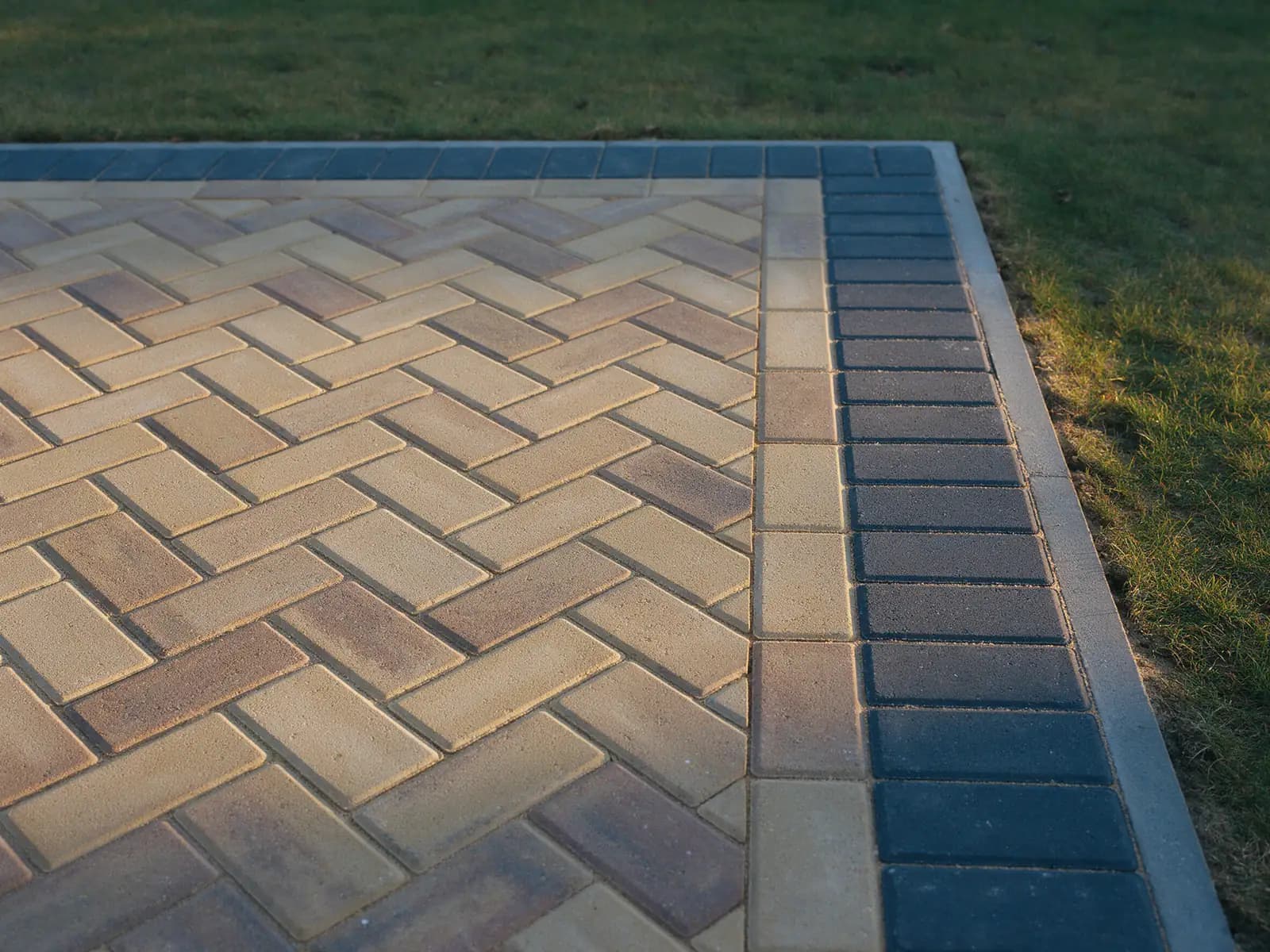
Block paving, resin, tarmac or a stone or porcelain patio. Each has its strengths, and each one fails early if the ground beneath it is wrong. Here’s how they compare, and how we build them.
How the three main driveway surfaces differ in look, lifespan, drainage and upkeep. For the full picture, read our block paving vs resin vs tarmac guide.
Block paving, resin or *tarmac*?
—
Block paving
Resin bound
Tarmac
Look
Textured and traditional, in many colours and patterns
Smooth natural stone with no joints
Plain and uniform, usually black or red
Typical lifespan
20–25 years
15–25 years
15–20 years
Permeable?
Permeable blocks, yes; standard blocks need drainage
Yes, when laid on a porous base
No, it needs drainage designing in
Maintenance
Sweep, top up joint sand, treat weeds
Sweep and rinse; wash once or twice a year
Sweep, and clean up oil and fuel quickly
Typical time for 50 m²
4–6 days
2–4 days
2–3 days
Repairs
Easy: blocks lift out and go back in
Possible, but patches can show
Possible, but patches usually show
Suits
Heavy use, slopes and traditional homes
Modern homes and permeable front gardens
Long or large drives on a tighter budget
Look
Block pavingTextured and traditional, in many colours and patterns
Resin boundSmooth natural stone with no joints
TarmacPlain and uniform, usually black or red
Typical lifespan
Block paving20–25 years
Resin bound15–25 years
Tarmac15–20 years
Permeable?
Block pavingPermeable blocks, yes; standard blocks need drainage
Resin boundYes, when laid on a porous base
TarmacNo, it needs drainage designing in
Maintenance
Block pavingSweep, top up joint sand, treat weeds
Resin boundSweep and rinse; wash once or twice a year
TarmacSweep, and clean up oil and fuel quickly
Typical time for 50 m²
Block paving4–6 days
Resin bound2–4 days
Tarmac2–3 days
Repairs
Block pavingEasy: blocks lift out and go back in
Resin boundPossible, but patches can show
TarmacPossible, but patches usually show
Suits
Block pavingHeavy use, slopes and traditional homes
Resin boundModern homes and permeable front gardens
TarmacLong or large drives on a tighter budget
Planning & drainage
Where the rain goes
Since 2008, the way a front driveway drains decides whether it needs planning permission.
Since October 2008, a new or replacement hard surface of more than 5 m² in a front garden in England has needed planning permission. The exception is a surface that lets rainwater soak through, or that drains onto a lawn, border or soakaway within your boundary. The aim is to keep rain out of overloaded drains and off the road.
We design around the rule from the start, so in most cases you won’t need to apply. Resin bound on a porous base and permeable block paving let water drain through. Standard block paving and tarmac are laid to fall towards a border, or onto a channel drain that feeds a soakaway. Our guide explains how the 2008 permeable-surface rule works, including the exceptions for listed buildings and flats.
Free quote
Not sure which surface suits you?
That’s what the survey is for. We’ll look at your ground, slopes and drainage, then tell you plainly which options will work, including the cheaper ones.