Tarmac · Yorkshire
Tarmac driveways in Yorkshire, hot-laid and rolled
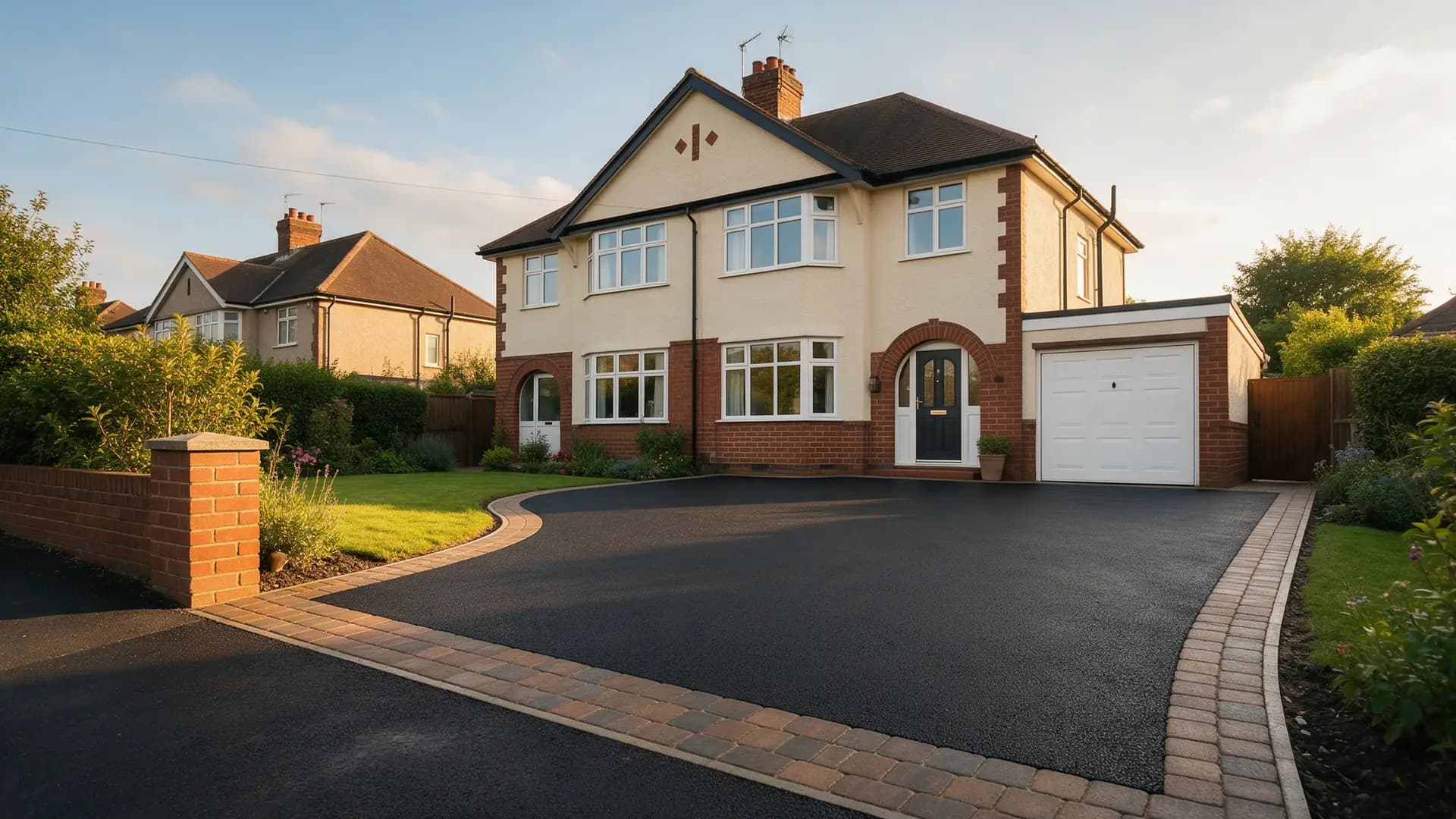
Tarmac driveways built in two hot-laid layers over a compacted MOT Type 1 base, contained by proper edging and shaped so water drains away. Free survey within 3 working days, a fixed written quote and a 10-year guarantee.
From £50/m²Usually 2–3 days on site
Overview
Tarmac today is bitumen macadam or asphalt rather than the old tar-based mix: crushed stone bound with bitumen, delivered hot and rolled into a dense, smooth surface. It’s quick to lay, quiet underfoot and usually the lowest cost per square metre of the driveway surfaces we install. It is a practical choice for long or wide drives and rural entrances, from the villages around Doncaster to farm lanes in the Dales.
There are trade-offs. Standard tarmac is impermeable, so a front-garden drive has to shed its water onto a lawn, border or soakaway, or it needs planning permission. It stays slightly soft for weeks after laying, so tyre scuffs and stand marks can appear in hot weather. And it offers far less pattern and colour than block paving. For many homeowners those compromises are worth the saving and the quick install.
A good tarmac drive has around 150mm of compacted MOT Type 1, a 50–60mm binder course and a 20–30mm surface course, each rolled while hot, with edging set in concrete to contain it. A poor one is a single thin layer raked over loose hardcore with no edging at all. It looks fine on the day, then cracks, sinks in the wheel tracks and crumbles at the sides within a couple of winters. The doorstep offer of ‘leftover tarmac from a job round the corner’ is the classic example.
We lay tarmac in two layers, with the thicknesses written on your quote, and we plan the falls before we dig, so water heads for a border, soakaway or channel drain rather than your garage or the pavement. If you’re weighing tarmac against the alternatives, our comparison of block paving, resin and tarmac sets out the trade-offs honestly.
Specification
The numbers that matter
- Typical lifespan
- 15–20 years
- Sub-base
- 150mm MOT Type 1, compacted in layers
- Tarmac layers
- 50–60mm binder course + 20–30mm surface course
- Permeable?
- No, so falls and drainage are designed in
- Ready to drive on
- Usually within 24–48 hours; hardens fully over weeks
- Time on site (50 m²)
- 2–3 days
The build
How we build it
Tarmac is laid hot and has to be rolled within a short working window, so the preparation is done in full before the wagon arrives.

Survey, levels and drainage plan
We measure, check levels against your damp-proof course and door thresholds, and plan the falls. Because tarmac is impermeable, we decide now whether water goes to a border, a soakaway or a channel drain.
Dig out and clear
The old surface and soil come out to around 200–250mm, more over soft ground, and roots and organic topsoil are removed. Spoil leaves by grab lorry or skip with a registered waste carrier.
Edging set in concrete
Kerbs or block edging are bedded and haunched in concrete to the finished levels. They contain the tarmac while it’s rolled and stop the edges cracking away in later years.
Sub-base compacted in layers
A weed treatment and geotextile membrane go down, then around 150mm of MOT Type 1 in layers, each compacted and checked against the falls. This is the layer that actually carries your car.
Binder course laid hot
A 50–60mm binder course of coarser tarmac is laid hot, raked to level and rolled with a vibrating roller while it’s still at working temperature, giving a strong, dense layer.
Surface course and rolling
A bond coat goes onto the binder, then the 20–30mm surface course is laid and rolled smooth. If you’ve chosen decorative chippings, they’re spread and rolled in while the surface is still hot.
Seal, clean and hand over
Joints where new tarmac meets old surfaces or the pavement are sealed, the site is cleaned, and we explain how to treat the drive while it hardens over the following weeks.
Finishes
Colours and finishes
Tarmac is usually black, but there are more options than most people realise. The aggregate size changes the texture, and rolled-in chippings add colour and grip.
Colours on screen are a guide — we bring real samples to your survey.
Black, 6mm fine finish
Smooth, tight surface; the classic look
Black, 10mm textured finish
Coarser texture with a little more grip
Red
Pigmented with iron oxide; mellows to a softer red
Black with golden chippings
Rolled in while hot; a few loosen in the first weeks
Black with granite chippings
Silver-grey chippings for a quieter sparkle
Charcoal block border
A block edge course that frames the tarmac
Price guide
What it costs
Black tarmac
- Per m²
- £50–£75
- Typical jobfor about 50 m²
- £2,500–£3,750
Red tarmac
- Per m²
- £65–£95
- Typical jobfor about 50 m²
- £3,250–£4,750
| Option | Per m² | Typical job |
|---|---|---|
| Black tarmac | £50–£75 | £2,500–£3,750for about 50 m² |
| Red tarmac | £65–£95 | £3,250–£4,750for about 50 m² |
Estimate your project
Guide price
£2,500 to £3,750
Guide price · typically 2–3 days
50 m² · Black tarmac
Rather talk it through? Call 07957 236658
An honest guide, not a quote. Levels, ground conditions and access all affect the final figure, so we always survey before giving you a fixed price in writing.
Guide price £2,500 to £3,750.
Aftercare
Looking after it
Tarmac is low-maintenance once it has hardened. The first few weeks are when it needs a little care.
- For the first few weeks, avoid turning the steering wheel while the car is stationary.
- Put a board under motorbike stands, caravan jacks and skip feet, especially in hot weather.
- Sweep regularly and clear leaves before they rot into a slippery film.
- Clean up fuel and oil spills straight away; they dissolve the bitumen that binds the surface.
- Keep the edges clear of soil and weeds so water can run off freely.
- Get small cracks looked at early, before water gets in and frost widens them.
Questions
Tarmac driveways: your questions
Why does new tarmac mark so easily?
Tarmac takes weeks to harden fully, longer in a hot summer. Until then, turning the wheel while stationary, motorbike stands, jacks and skip feet can all leave marks. Most scuffs soften and fade as the surface weathers. Parking in slightly different spots for the first month and using a board under anything with a small foot will keep it looking new.
Do I need planning permission for a tarmac drive?
Only if it’s in the front garden, larger than 5 m², and the water has nowhere permeable to drain. We design falls to a lawn, border or soakaway, which keeps most drives within permitted development. Listed buildings, flats and some conservation areas have different rules, so we check those before we start.
Can you lay new tarmac over my old drive?
Sometimes, if the old base is sound and the extra height won’t take the surface too close to the damp-proof course or foul your door thresholds. Overlaying a drive that’s cracked or sinking simply copies the problem onto the new surface within a year or two. In most cases a full dig-out and new base is the honest recommendation.
Should I choose a 6mm or a 10mm surface?
A 6mm surface course gives the finer, smoother finish most people prefer on a house drive. A 10mm surface is coarser, with a little more texture and grip, and suits steeper or busier drives. Both sit on the same binder course and base, and we’ll bring samples so you can see the difference.
Is ‘leftover tarmac’ from a nearby job a good deal?
No. Hot tarmac can’t be kept and reused, and doorstep offers like this are a well-known rogue-trader tactic. These jobs usually skip the sub-base and edging, and the surface breaks up within months. If someone knocks with this offer, don’t agree to anything, and report it to Trading Standards through the Citizens Advice consumer helpline.
How long will a tarmac driveway last?
Typically 15–20 years when it’s built on a proper sub-base with solid edging. Most early failures come from what’s underneath: a thin base, poor compaction or no edge restraint. Tree roots and standing water also shorten its life, which is why we look for both at the survey and design around them.
Also consider
Related services


Free quote
A fixed price, after a free survey
Tell us what you have in mind and we’ll arrange a visit. You’ll get a fixed written quote, a 10-year guarantee and no pressure to decide.
Free survey · fixed written quote · no pressure