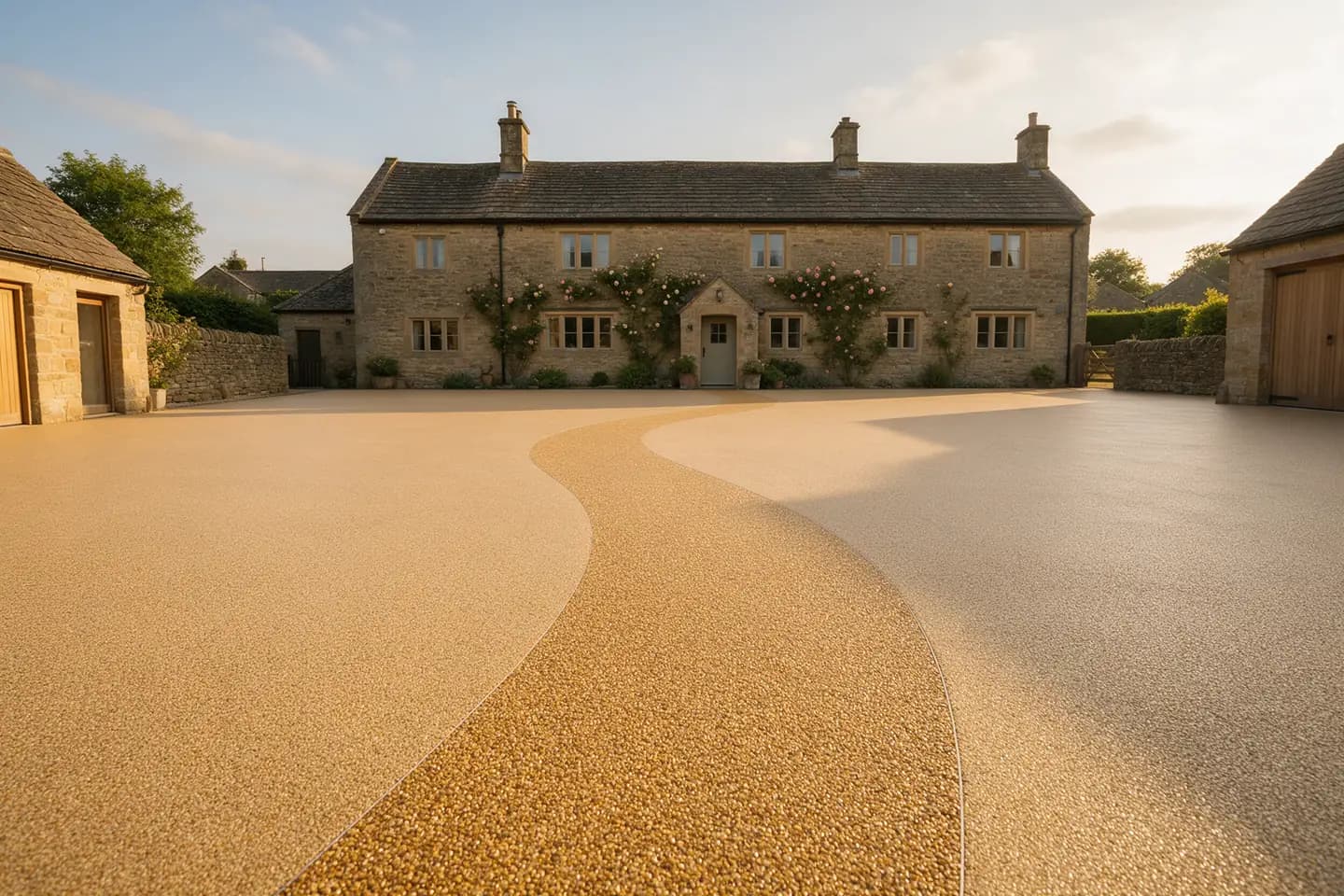
Resin bound driveways attract a wider spread of quotes than any other surface. The reason is simple: the 18mm layer you see is the easy part. What sits underneath, the resin used and the weather it’s laid in decide both the price and whether the drive lasts twenty years or two winters. Here is what you are paying for.
Guide prices for 2026
There are two routes. A full installation digs out the old drive and builds a new permeable base. An overlay lays resin directly onto an existing tarmac or concrete surface that is sound enough to take it. The table shows our guide prices for both, plus a typical 50 m² job.
Resin bound driveway guide prices for Yorkshire, 2026. A fixed written quote follows a free survey.
Full installation with a new base
- Per m²
- £80–£120
- Typical jobfor about 50 m²
- £4,000–£6,000
Overlay onto sound existing tarmac or concrete
- Per m²
- £55–£75
- Typical jobfor about 50 m²
- £2,750–£3,750
| Option | Per m² | Typical job |
|---|---|---|
| Full installation with a new base | £80–£120 | £4,000–£6,000for about 50 m² |
| Overlay onto sound existing tarmac or concrete | £55–£75 | £2,750–£3,750for about 50 m² |
Overlay or new base: the biggest decision
An overlay saves the cost of digging out and building a base, so it is understandably popular. It only works if the existing surface would make a good base in its own right. Before we recommend one, all of these need to be true:
- The surface is sound and stable, with no sinking, soft spots or potholes.
- There are no active cracks. Cracks and concrete expansion joints show through resin.
- The edges are firm, or there is room to add proper edging.
- Raising the level by around 18mm won’t foul door thresholds or the damp-proof course.
- Water has somewhere to go, because an old tarmac or concrete base doesn’t let it through.
What you’re paying for
The base
On a full installation, the old surface comes out and an open-graded stone sub-base goes in, topped with porous asphalt, an open-textured tarmac that lets water pass. This build-up is what makes the finished drive permeable. It is also the largest single part of the cost and the part most worth paying for.
Depth
Driveways need a full 18mm of resin bound aggregate; paths and patios can be 15mm. Laying 12mm on a drive saves about a third of the materials, which is why it happens. The thin layer then cracks and loosens where tyres turn, often within the first year.
The resin
UV-stable aliphatic resin costs more than aromatic resin. Aromatic resin darkens and yellows in sunlight, which shows quickly on pale and golden blends. A quote should name the resin type; if it doesn’t, assume the cheaper one.
The aggregate blend
Blends are natural stone, kiln-dried and graded, usually from about 1mm to 6mm. Standard gravels cost less than specialist stones, and darker or brighter blends can carry a premium. The colour you choose rarely changes the price much, but the stone type can.
Edging, access and shape
Resin needs a solid edge to finish against, so block or metal edging is usually priced per metre unless walls or kerbs already do the job. Restricted access adds time, as it does for any surface. Simple shapes cost less than curves and tight corners, which need more hand trowelling and more edging.
Slopes and anti-slip
Resin bound grips well on gentle slopes. Steeper drives need a fine anti-slip grit scattered over the fresh surface and careful trowelling so the mix doesn’t creep before it cures, which adds time. Very steep drives may suit block paving better. Slope affects drainage too: water running down a permeable drive can still gather at the bottom, so a channel drain there is often worth including.
Drainage and planning
A resin drive on a permeable base meets the front-garden rule without extra drains. An overlay on impermeable tarmac or concrete does not, so it may need falls to a border or a channel drain. Our guide to driveway planning permission and SuDS explains when that matters.
The weather
Resin is only laid on a dry base, with no rain forecast during laying and curing, and in temperatures that suit the resin. Yorkshire weather means some bookings move. A firm that never reschedules is either very lucky or laying in conditions it shouldn’t.
What a good resin quote should say
- Resin bound, not resin bonded, stated in words.
- The finished depth: 18mm for a driveway.
- The resin type: UV-stable aliphatic.
- The aggregate blend and grading.
- The base: either the new build-up with thicknesses, or an overlay with notes on the existing surface’s condition.
- Edging, drainage and any anti-slip finish on slopes.
- Curing times, waste disposal and the written guarantee.
Warning signs specific to resin
- A low price for an overlay on a drive you know is cracked or sinking.
- ‘Resin driveway’ with no mention of bound or bonded.
- No resin type named, or a shrug when you ask about UV stability.
- Willingness to lay on a damp base or with rain forecast.
- A depth under 18mm for a drive that takes cars.
The general warning signs apply too: cash only, pressure to sign today, leftover materials and no written quote. Our block paving cost guide covers those, along with your 14-day right to cancel a contract agreed at home.
Lifespan and long-term value
A resin bound drive on a sound base typically lasts 15–25 years with sensible care: sweeping, an occasional gentle jet wash and prompt clean-up of oil. Repairs are possible but usually visible, so it pays to get the base right first time. If heavy vans turn on your drive daily, or you expect cables or pipes to be dug in later, block paving may be the better long-term buy. Our comparison of block paving, resin and tarmac weighs them side by side.
Resin paths and patios
Paths and patios can be laid at 15mm, usually in a finer blend, on a base that doesn’t have to carry cars. That makes them lower in cost per square metre than a drive, although small areas carry a bigger share of set-up time. Laying the drive and the front path in the same blend ties the front of a house together, and doing both in one visit avoids paying for a second set-up.
How we quote resin
We lay resin bound only, 18mm thick on drives, with UV-stable resin, and we’ll tell you honestly whether your current surface can take an overlay. The survey is free, usually within 3 working days, and your written quote lists every layer. From terraces in Leeds to period houses in Harrogate, each resin driveway we lay carries a 10-year written guarantee.